
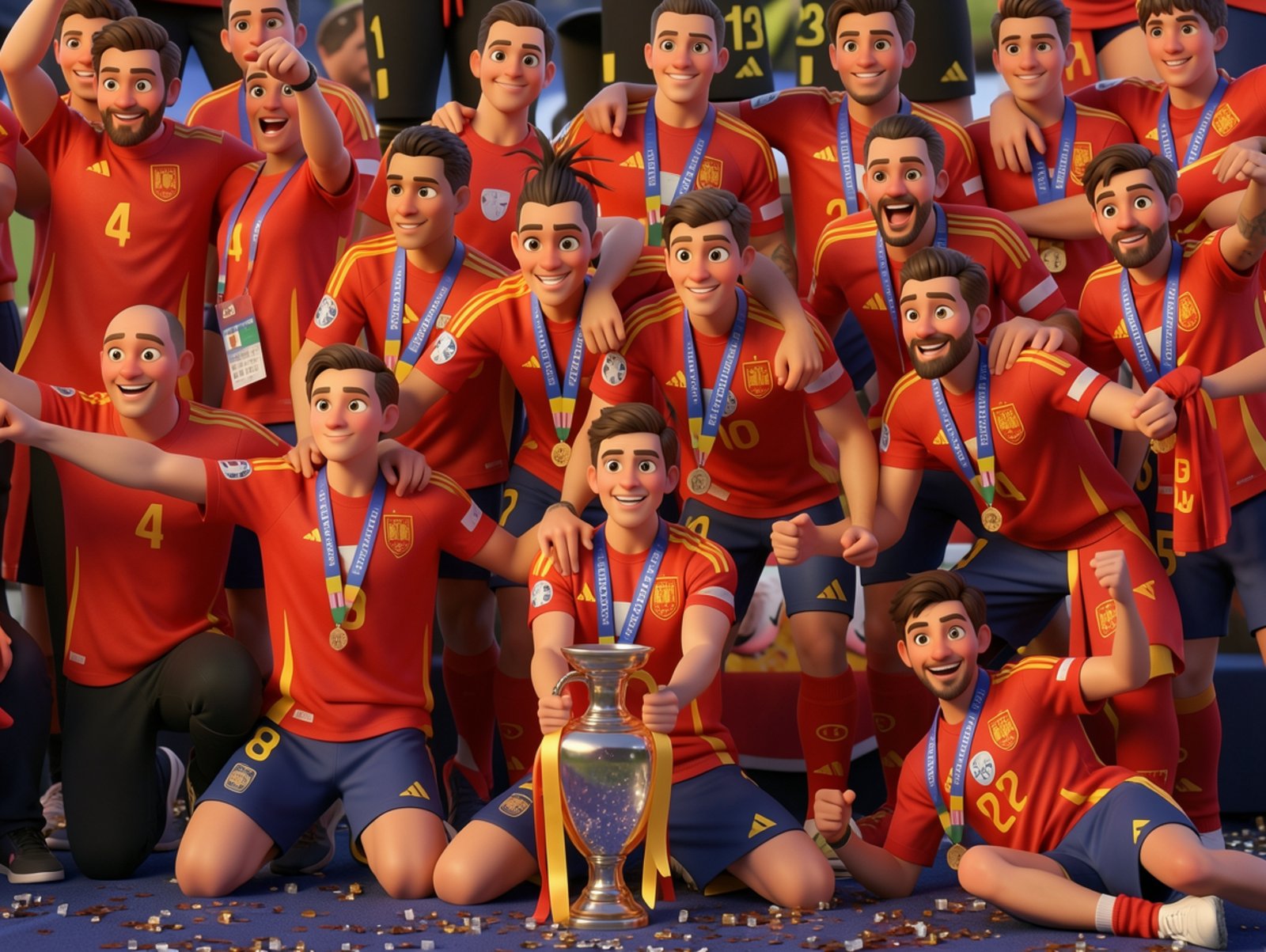
Spain are world champions. Again.
In one of the most dramatic World Cup finals in living memory, Ferran Torres swept home a close-range finish in the 106th minute of extra time to give Spain a 1-0 victory over Argentina at MetLife Stadium in New Jersey on Sunday evening. For Lionel Messi, it ended in tears — standing in front of Argentina’s fans, runners-up medal around his neck, knowing this was almost certainly his last appearance at a World Cup.
For Spain, it is their second World Cup title — their first since Iniesta’s extra-time winner in Johannesburg in 2010. They became the first nation in history to hold the men’s and women’s World Cup simultaneously. They finished the tournament without losing a single match, having conceded just two goals in eight games. They were, without question, the best team in this World Cup from start to finish.
Here at GameDay, we break down every extraordinary moment of Sunday’s final.
The Scene: MetLife Stadium at Its Most Spectacular
The occasion was everything a World Cup final should be. MetLife Stadium, with 82,500 fans packed inside, was a wall of noise from the moment the teams emerged. US President Donald Trump was among the star-studded crowd. Tom Cruise delivered a speech at the closing ceremony. Ring announcer Michael Buffer bellowed his famous line before kick-off in a moment of pure American spectacle.
The opening ceremony ran long. Kick-off was delayed by five minutes. Nobody cared. By 3:05pm ET, the greatest match of 2026 was finally underway.
First Half: Spain Dominate, Martínez Defies Them
Spain controlled the match from the very first minute. They finished the game with 60% possession. They had 20 shots to Argentina’s two. Their xG total was 1.94 compared to Argentina’s staggering 0.2. In other words, Spain were dominant to a degree that made it almost impossible to explain why the scoreline remained 0-0 at full time.
The answer was simple: Emiliano Martínez.
Argentina’s goalkeeper was the best player on the pitch for the entire 90 minutes and beyond. Lamine Yamal forced him into the first of many saves in the opening 10 minutes. Mikel Oyarzabal hit the post from six yards. Dani Olmo drilled a shot that Martínez tipped onto the crossbar. Rodri headed straight at him from a corner. Save after save after save.
Argentina, meanwhile, barely threatened. Messi dropped deep repeatedly, searching for the ball, creating danger with his vision and his passes — but Spain’s defensive structure was impenetrable whenever Argentina moved forward. Julián Álvarez had one shot in the first half. It went wide. That was essentially the sum total of Argentina’s attacking output for the first 90 minutes.
At half-time, it was 0-0. Spain deserved to be ahead by several goals. They were not.
The Turning Point: Fernández’s Red Card
The moment that changed the final came in the third minute of first-half stoppage time. Enzo Fernández, who had been superb for Argentina throughout the tournament, received his second yellow card of the match for a cynical trip on Olmo. Referee Slavko Vincic had no hesitation. Red card. Argentina down to 10 men. The final had shifted irreversibly.
From that point, Spain looked like the only side capable of winning. Argentina reorganised defensively and sacrificed everything for the goalless draw that would take the match to extra time. Messi barely touched the ball in the final 20 minutes as Argentina threw bodies behind the ball.
It was not enough to keep Spain out. However, Argentina were still alive when the 90 minutes ended with the score at 0-0.
Williams Rules Out, Then Torress
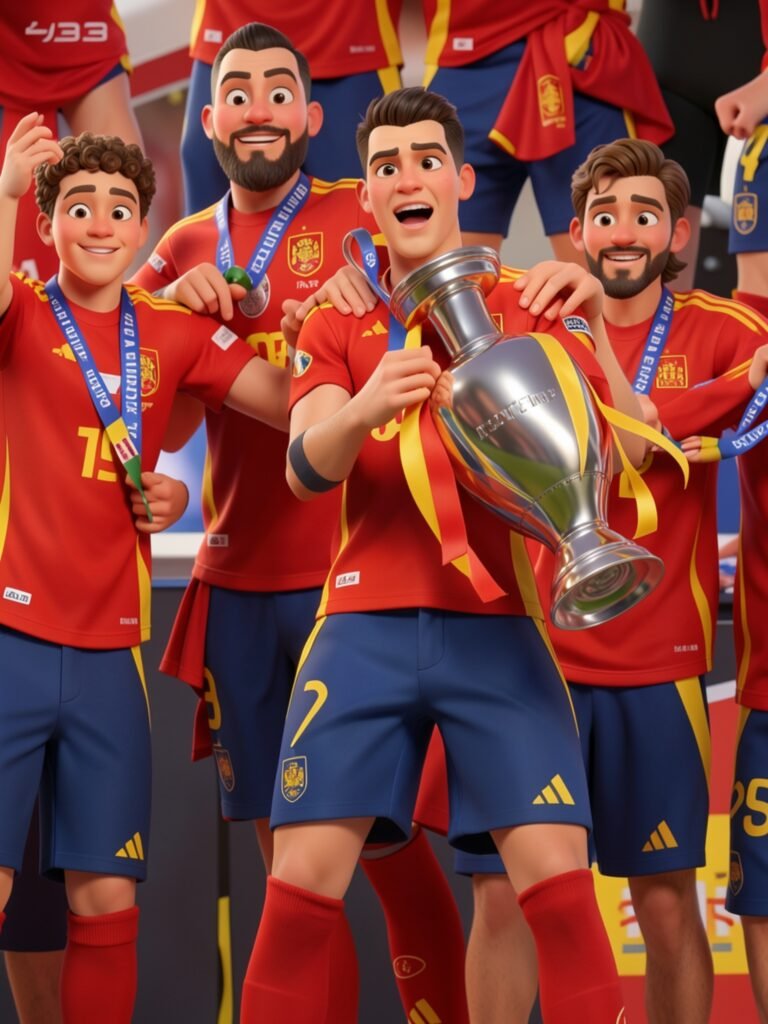
Extra time opened with Spain immediately on the front foot. Nico Williams — introduced as a substitute — drove at Argentina’s defence with relentless energy. In the 98th minute, he fired into the net after beating two defenders. However, VAR intervened. Mikel Merino had fouled Otamendi in the build-up. Goal disallowed. Spain’s players could not believe it.
The controversy lasted only seconds. Within 37 seconds of the restart, Spain were ahead. Williams received the ball again on the right side of the penalty area, cut inside, and found Ferran Torres arriving at the far post. Torres rifled the ball into the roof of the net. Martínez, for the first time all evening, had no chance. Spain led 1-0.
Argentina threw everything forward in the remaining 14 minutes of extra time. Rodrigo De Paul drove forward repeatedly. Thiago Almada, introduced as a late substitute, worked a shooting chance that Unai Simón saved. But Spain held on. They always hold on.
When Vincic blew his whistle for the last time, Spain were world champions.
The Final Whistle: Messi in Tears, Spain in Ecstasy
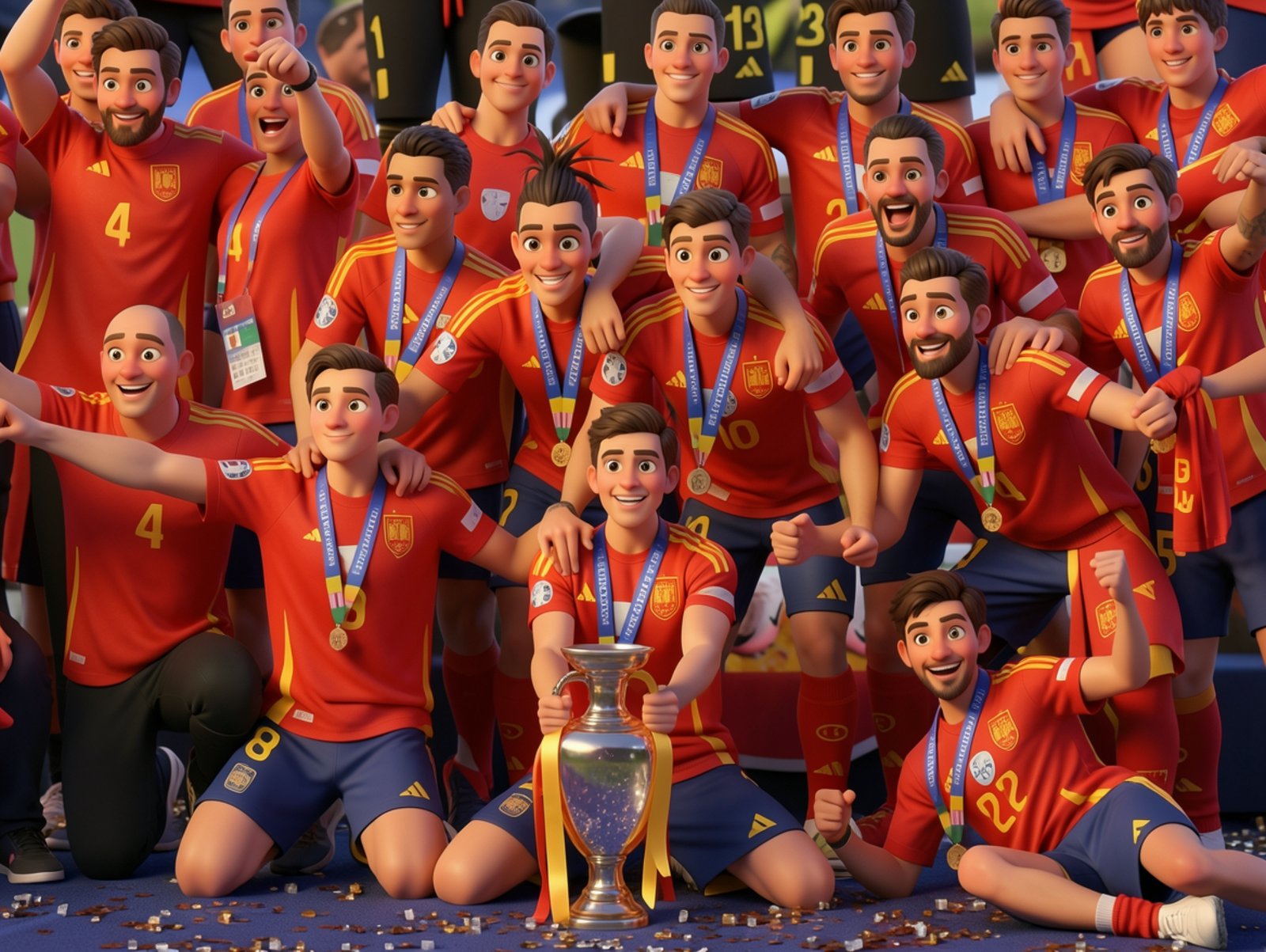
The scenes after the final whistle were extraordinary. Spain’s players piled on top of each other in the centre of the pitch. Luis de la Fuente, their quietly brilliant coach, was surrounded by his staff and wept openly on the sideline.
Meanwhile, Messi stood alone in front of the Argentina fans. Tears streaming down his face. Runners-up medal around his neck. Thirty-nine years old. Almost certainly playing his final World Cup game. The greatest footballer who ever lived, unable to find the magic that had rescued Argentina so many times before.
Tensions boiled over after the final whistle. Leandro Paredes was reportedly sent off in the aftermath. Several confrontations broke out between players from both sides. It took several minutes for order to be restored.
Trump squeezed into a celebration photograph with Spain’s coaching staff. The moment was immediately mocked worldwide. It was quintessentially 2026.
Spain’s Historic Achievement
Spain’s victory on Sunday is one of the great achievements in international football history.
They are only the third nation to win the World Cup more than once in the modern era after Brazil and Germany. They become the first nation ever to hold the men’s and women’s World Cup simultaneously. They did not lose a single match at the 2026 World Cup. They conceded just two goals in eight games. They outscored their opponents 14-2. Their xG conceded across the tournament — 3.1 from 104 opponent attempts — is the lowest of any World Cup winner in the data era.
Furthermore, Lamine Yamal finished the tournament as one of its standout players despite his one goal and one assist not fully capturing his influence. At 19 years old, having delivered a Man of the Match performance in a World Cup final, he is clearly the best young player on the planet and the future of the game. Rodri won the tournament’s best midfielder award. Oyarzabal finished as Spain’s top scorer with five goals.
According to the FIFA official match statistics, Spain’s 20 shots to Argentina’s two in the final tells the complete story of how thoroughly they dominated without being rewarded until extra time.
Messi: The End of an Era
There are no words adequate to describe what Lionel Messi has meant to football. But Sunday in New Jersey may have been his final act on the World Cup stage.
He finished the 2026 World Cup with eight goals and six assists — 14 direct contributions in seven matches. He scored in every knockout match except the Switzerland quarter-final and Sunday’s final. He carried Argentina to a final they had absolutely no right to reach given how they played from the first knockout match onwards.
He did not win. However, what he gave this tournament — at 39 years old, in what everyone expects to be his last World Cup — was extraordinary. He leaves the competition as the all-time leading scorer with 21 career World Cup goals. He leaves as the player with the most Golden Balls in tournament history. He leaves as the only player ever to appear at six World Cups.
He was in tears at the final whistle. Understandably so. For more on his extraordinary career and what this tournament meant for his legacy, read our full Messi vs Ronaldo: The Final Chapter feature.
Full Match Stats
| Stat | Spain | Argentina |
|---|---|---|
| Goals | 1 | 0 |
| Shots | 20 | 2 |
| Shots on target | 12 | 0 |
| xG | 1.94 | 0.20 |
| Possession | 60% | 32% |
| Corners | 11 | 2 |
| Red cards | 0 | 1 (Fernández, 90+3′) |
The 2026 World Cup in Numbers
What a tournament this has been. The first 48-team World Cup. The biggest attendance figures since 1994. The most goals ever scored — 290 across 104 matches. The most VAR controversies ever recorded. The first African nation to reach back-to-back quarter-finals in Morocco. Cape Verde making the Round of 32 with a population of 500,000. Messi breaking every World Cup scoring record imaginable.
For our full coverage of every moment of this extraordinary tournament, everything is available right here at pitchmag.online. You can also find the complete official tournament statistics at ESPN’s World Cup hub.
GameDay Verdict
Spain were worthy champions. Utterly, completely worthy.
They dominated this tournament from the first group game to the final whistle of extra time on Sunday. Their defensive record was historic. Their tactical discipline was breathtaking. Their ability to control matches without necessarily creating clear-cut chances was remarkable. And when they needed a hero in extra time, Ferran Torres delivered.
For Argentina, this is a painful way for Messi’s World Cup story to end. They reached the final by refusing to die, by producing late goals in every knockout match, by sheer force of will. However, on Sunday, that will was not enough against a Spain side that was simply the better team in every statistical and tactical measure.
Messi leaves this tournament as the greatest World Cup player in history. That will never change. However, Spain leave MetLife Stadium as world champions — and they deserve every second of their celebration.
Spain won the 2026 World Cup. What do you think of this Spain side — are they the greatest international team of the modern era? Drop your take in the comments.
Thank you for following the 2026 World Cup with GameDay. Stay with pitchmag.online for all the latest football news, analysis, and coverage as we now turn our attention to the 2026/27 Premier League season at pitchmag.online.
You might also enjoy:
Leave a Reply